Table of Contents
Toggle- Introduction
- From Temporary Overlays to Lasting Augmented Reality
- Why Persistence Matters for Augmented Reality Experiences
- Technical Foundations of Persistent Augmented Reality
- Real-World Impact: Augmented Reality in Action
- Codora’s Role in Building the Future of Augmented Reality
- Looking Ahead: The Next Chapter for Augmented Reality
Introduction
“I believe that augmented reality will be the biggest technological revolution that happens in our lifetimes,” said Tim Sweeney, CEO of Epic Games, during his 2016 keynote at the Augmented World Expo (AWE), and 2025 is proving him right.
For years, augmented reality (AR) was treated as a novelty, fun, flashy, and fleeting. Snapchat filters amused us, Pokémon Go got us outside, and retail AR apps offered glimpses of what shopping could look like in the digital age. But once the session ended, the experience disappeared. AR wasn’t something you could return to; it lacked permanence, continuity, and depth.
That era is transitioning in 2025, where persistent augmented reality is moving AR into a new phase defined not by gimmicks but by immersion. The promise of digital content that stays anchored across time, devices, and users is beginning to reshape how we learn, shop, collaborate, and even receive healthcare. This shift transforms AR from an entertainment tool into an infrastructure.
The stakes are massive. Analysts estimate the global AR/VR/MR market at $42.4 billion in 2023, with growth expected from $58.98 billion in 2024 to an impressive $826.63 billion by 2032. SkyQuest projects this growth at a robust 39.1% CAGR (2025–2032) (SkyQuest, 2024). Statista further reports that there were about 1.03 billion mobile AR users worldwide in 2024, with the number expected to reach 1.07 billion in 2025 and climb to 1.19 billion by 2028, based on monthly active users of apps, web AR, and visual search (Statista, 2024). These figures show that persistence won’t just be an experiment; it will become an expectation.
From Temporary Overlays to Lasting Augmented Reality
Think back to the first time you used an AR app, maybe trying dog ears on Snapchat or chasing Pokémon in the park. Fun, yes, but ephemeral. Once you closed the app, the experience was gone. There was no history, no continuity, no growth.
Businesses ran into the same limitation. A retailer might create an AR try-on campaign, but the interaction ended as soon as the user logged out. A museum could build an AR guide, but the visitor couldn’t return to the same immersive layers later. Without persistence, augmented reality was exciting but shallow.
Now, persistence changes that dynamic. Imagine placing a virtual sofa in your living room through IKEA’s Place app and then coming back the next day to find it exactly where you left it. Or walking into a museum where
AR-enhanced exhibits remain in place across multiple visits. In classrooms, persistent AR means students can return to the same digital lab week after week, reinforcing learning rather than starting from scratch. This is the difference between AR as a filter and AR as a foundation.

Why Persistence Matters for Augmented Reality Experiences
Technical Foundations of Persistent Augmented Reality
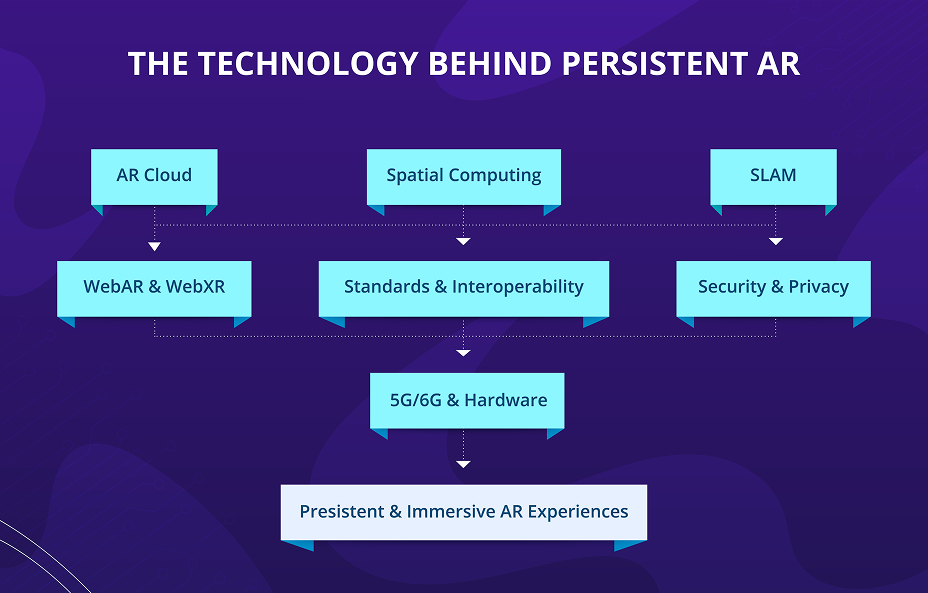
Persistent augmented reality is powered by several critical technologies working together to anchor digital objects in real-world spaces and keep them stable across time, users, and devices.
The AR Cloud acts as a digital twin of the real world, storing spatial maps and anchor points, so experiences appear in the same place for every user, every time. Companies like Niantic (Lightship), Google (ARCore), and Apple (ARKit) are leading this effort. At scale, the AR Cloud requires high-speed servers and low-latency networking (<20ms) to sync billions of data points across devices, ensuring shared persistence.
Spatial computing gives AR the ability to understand and interact with surroundings. By combining cameras, LiDAR, gyroscopes, and AI-driven computer vision, it tracks objects, rooms, and even people in real time. This ensures a digital sofa placed in your living room stays aligned with the floor, even when you return days later. As devices evolve, spatial computing is extending to multi-user shared spaces and integrating with IoT environments.
SLAM algorithms are the mathematical engines behind AR’s stability. They allow devices to map environments on the fly while localizing their own position, which is essential for mobile AR. For immersive realism, SLAM needs accuracy within 1–2 cm and latency below 20ms. AI-enhanced SLAM now handles challenges like poor lighting or moving objects, making shared, persistent AR more reliable.
Modern AR is no longer locked inside apps. WebAR and WebXR APIs bring AR directly to browsers, reducing adoption friction. Built on JavaScript, WebGL, and the WebXR Device API, they enable AR experiences that are instantly shareable. While browser-based AR still lags behind native apps in rendering complexity, rising support across Chrome, Firefox, and Edge is closing the gap fast.
Without standards, AR persistence would be fragmented. Frameworks like OpenXR ensure applications run across AR headsets, smartphones, and future AR glasses. This interoperability is critical for making AR experiences universal rather than platform dependent.
Persistent AR doesn’t just map rooms, it maps lives. Spatial data, user interactions, and personal environments must be secured. Encrypted cloud storage, permission layers, and privacy-by-design principles are vital to protect users as AR adoption scales. Regulations like GDPR in the EU will increasingly shape how persistent AR platforms store and process spatial data.
Finally, the shift to 5G and emerging 6G networks underpins AR’s real-time performance, delivering the bandwidth and latency needed for persistence at scale. Combined with AR-specific hardware, LiDAR-enabled phones, lightweight AR glasses, and spatial audio devices, these technologies are converging to make immersive AR the default, not the exception.

Real-World Impact: Augmented Reality in Action
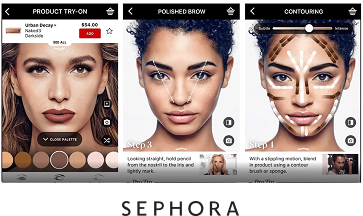
The most compelling part of persistent AR isn’t the tech; it’s what people do with it. Here are some industries leading the charge:


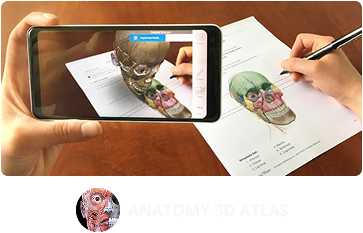
Education: Apps like Human Anatomy Atlas give students interactive 3D models of the body. With persistence, lessons build over time, and experiments in AR labs can be revisited week after week, turning one-off sessions into iterative learning experiences.
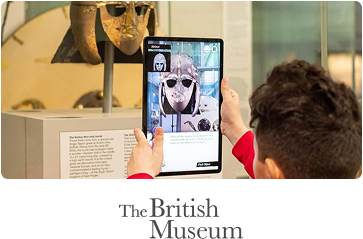
Tourism & Culture: The British Museum has experimented with AR guides. Persistence allows exhibits to retain digital overlays so returning visitors encounter living, evolving experiences.


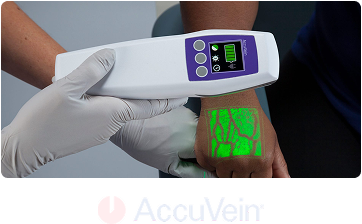
Healthcare: AccuVein already uses AR to project veins for injections. Persistent AR can extend this to training simulations, where scenarios remain consistent across multiple sessions, raising the quality of medical education and practice.
Entertainment: Coldplay’s AR-enhanced concerts illustrate how persistence can blend digital visuals with live shows. AR games and shows can unfold over multiple sessions, transforming entertainment into continuous storylines rather than single-use experiences.

These examples show AR moving from sideshow to stage.
Codora’s Role in Building the Future of Augmented Reality
At Codora, we’ve been building for this future. Through Anchorium Link, we demonstrate the potential of persistent augmented reality in action. By developing SDKs that simplify cross-platform integration, enabling lifelike 3D anchoring, and embedding spatial audio, we’re turning immersive AR from an experiment into infrastructure.
What makes Anchorium Link especially powerful is its ability to deliver experiences on a mobile device that feel as rich and immersive as those offered by high-end AR goggles. Even more, the 3D models deployed at persistent anchors don’t just animate — they leverage spatial computing to interpret their environment, walking, navigating, and even guiding users in real time.
Anchorium Link is more than a project; it’s proof that persistence works. It highlights how AR apps can evolve from short campaigns to platforms that deliver long-term value.
For Codora, augmented reality app development isn’t about quick wins; it’s about enabling creators, educators, and businesses to design immersive AR experiences that persist, connect, and inspire.
Looking Ahead: The Next Chapter for Augmented Reality
2025 marks a turning point. With billions of AR-enabled devices in circulation, persistent augmented reality and immersive experiences aren’t just “nice to haves”, they’re the baseline. For businesses, the takeaway is clear: early adopters of AR spatial computing, AR cloud, and WebXR will be the ones leading their industries.
They’ll design customer journeys that extend beyond transactions, classrooms that last beyond lessons, and performances that live on long after the stage goes dark.
And we’re already seeing this future take shape from Apple’s Vision Pro, which promises to redefine mixed reality experiences, to Niantic’s AR development tools that empower creators to build persistent worlds, to Microsoft’s Mesh platform, which makes collaboration in shared digital spaces a reality.
At Codora, we’re excited to be shaping this next chapter, building augmented reality that doesn’t just entertain for a moment but endures for a lifetime.
Because the future of AR isn’t about what disappears when you close an app, it’s about what remains.
Ready to unlock the next chapter of augmented reality?
Whether you’re envisioning a groundbreaking product, immersive experience, or AR-powered game, our team at Codora is here to help bring it to life.
Reach out to us at hello@codora.io to schedule your free, no-obligation consultation, and start building a reality that lasts.